

-

John Tejada – Moss and Pink (w Sainte Béatrix) / Room Tone
John Tejada returns with Moss and Pink / Room Tone, a two-track journey through deep bass, textured rhythms and atmospheric vocals by Sainte Béatrix.
John Tejada continues his recent run of texture-driven, rhythm-focused releases with Moss and Pink / Room Tone, a two-track single that moves vocal atmosphere and a darker, more textural instrumental side.
“Moss and Pink” features Sainte Béatrix, formerly of Diamond Day, who previously collaborated with Tejada on “How I’m Wired” in 2024. Her layered vocal work sits at the center of the track, drifting through deep bass, late-night motion, and swirling textures. The result is atmospheric and intimate, but still grounded by a steady sense of forward movement.
“Room Tone” follows as a solo piece, continuing Tejada’s exploration of texture, space, and weight over beats. Heavy low-end and shifting sonic details give the track a physical feel, while the surrounding atmospheres leave room for ambiguity and shadow.
Together, the two tracks feel connected by mood and restraint. One leans into voice and drifting color, the other into rhythm and pressure, both carrying the sense of an artist refining a language of atmosphere, bass, and movement.
Sainte Béatrix bio
Equal parts archivist and futurist, Sainte Béatrix is the solo project of singer-songwriter and multi-instrumentalist Béatrix Méthé, a distinctive voice in contemporary folk music and its most adventurous intersections. Raised on Québec folklore, she has spent her career blurring the lines of traditional songcraft, dream-pop, and atmospheric soundscapes.
She spent a decade touring internationally with her indie-folk band Rosier. She also explored shoegaze and electronica with Diamond Day. Her work lives where old stories and new sounds converge.
John Tejada bio
John Tejada is a Vienna-born, Los Angeles-based electronic music composer, KCRW DJ, and professor at CalArts. Active since 1994, Tejada has released a vast catalog including five albums for Kompakt, as well as work on Pokerflat, Cocoon, Brainfeeder, Seventh City, Playhouse, Defected, and his own long-running imprint Palette Recordings. His work includes more than 100 remixes and collaborations across the electronic music community.

Details:
Artist: John Tejada
Release: Moss and Pink (w Sainte Béatrix) / Room Tone
Label: Palette Recordings / PAL102
Release Date: July 24th, 2026Tracks:
1. Moss and Pink (w/ Sainte Béatrix)
2. Room ToneTaged as/in; ambient, atmosphere, Bass, Béatrix Méthé, beats, deep, Diamond Day, Electronic, Electronica, Experimental, John Tejada, Kompakt, Los Angeles, Moss and Pink, Palette Recordings, Québec, Room Tone, Sainte Béatrix, soundscape, techno, Texture, Vienna#writtenby:

-

“Begegnung” eine Ausstellung von Juan Carlos Rosa Casasola
Die Ausstellung „Begegnung“ von Juan Carlos Rosa Casasola zeigt, wie Kunst verbindet, Begegnungen schafft und kreative Prozesse emotionale Heilung fördern.
Die Eröffnung der Ausstellung „Begegnung“ von Juan Carlos Rosa Casasola findet am Samstag, den 15. August, von 10 bis 12 Uhr bei Eszenzia in Berlin-Charlottenburg statt.
„Begegnung“ steht für die vielen Verbindungen, die durch Kunst entstehen können – zwischen Menschen, aber auch mit den eigenen Gedanken und Gefühlen. Wie Du vielleicht weißt, sind meine eigene künstlerische Praxis und meine kreativen Workshops im vergangenen Jahr immer stärker miteinander verbunden.
In dieser Ausstellung zeige ich Zeichnungen und Gemälde von mir sowie Arbeiten von Teilnehmer:innen meiner Workshops. Die Ausstellung beschäftigt sich damit, wie Malerei Momente der Verbindung schaffen kann – mit uns selbst und mit anderen – und wie kreatives Arbeiten emotionale Heilungsprozesse unterstützen kann.

Eröffnung: Samstag, 15. August, 10 – 12 Uhr
Eszenzia – Danckelmannstraße 20, 14059 Berlin
Freitag und Samstag von 10 bis 22 Uhr sowie Sonntag und Montag von 10 bis 17 Uhr.
Taged as/in; art, Begegnung, berlin, Charlottenburg, drawing, Eszenzia, exhibition, Juan Carlos Rosa Casasola, Kunst, Kunstausstellung, Malerei, painting, Workshop#writtenby:

-

Transmediale: Open Calls Residencies 2027 & Summer Updates
transmediale opens its 2027 residency calls, invites research submissions for RFC 40, and expands its community through Lattice Labs and public discourse.
Before we slow down into the summer months, we have plenty of news to share: As we say goodbye to this year’s residents, the open calls for the 2027 residency cycle are out!
In the meantime, preparations for transmediale RFC 40 are under way and submissions are open for the DARC PhD/Research Workshop 2027. We are welcoming our first participants to the festival now. The Lattice Labs started their collective process in July. For a little listening, you can tune into the audio recording of the Ritualistic Cinema conversation. And don’t miss our last pool event at Tropez in August.


RESIDENCIES 2027

How do we reconfigure technical paradigms towards new cultural protocols, outside of widespread extractive logics, moving from critique to construction? The 2027 residency programme extends transmediale’s moment of reflection. It encourages future-imagining of its 40th anniversary throughout the year. It asks how a network can remain legible to itself while surrounding structures fall apart. This year’s open call seeks proposals offering alternatives to how we understand, respond to, and shape the technological conditions we inhabit.
Digital Art Residency
in cooperation with Pro Helvetia
Open to 1 Swiss or Switzerland-based artisttransmediale x ARKO Residency
in cooperation with Arts Council Korea
Open to 1 Korean artist, based in Korea or elsewhereVilém Flusser Residency for Artistic Research
Open Call in cooperation with Universität der Künste Berlin
Open to 1 artist based in BerlinThe application deadline for all programmes is 28.08.2026 (23:59 CEST). Each residency has specific requirements; please check them carefully in each open call section.
TRANSMEDIALE 2027

Open Call for DARC PhD/Research Workshop
Interstices: Research (in) the gapsIn response to transmediale’s 2027 thematic framework, the annual research workshop, organised by the Digital Aesthetics Research Center (Aarhus University) in collaboration with transmediale, is calling for participants. Interstices: Research (in) the gaps is targeted toward PhD/early career researchers, and welcomes submissions from researchers from inside/outside the academy, including artists, designers, and curators. Application deadline is 28.08.2026 (23:59 CEST).
Announcing the Lattice Lab Participants
A collective process building toward RFC 40Last month, we closed the open call for lattice labs participation. The Lattice Labs are a series of experimental working groups. They are dedicated to rethinking and testing alternatives to technological monocultures of extraction and surveillance. Each is led by an artist and technologist of the field. Building towards the festival, the Labs introduce a process-based approach to collective learning and knowledge dissemination. Learn more about all lattice lab participants on our website.
COLLABORATION

conversation pieces: pool edition transmediale x Tropez
Join us for the last conversation by the pool on August 8, at 15:00 💦 The discourse series conversation pieces takes everyday technologies as its starting point and situates them in the context of the swimming pool. What does it mean to hold, as a technological as much as a cultural practice? And what alternative narratives about technology open up when we stop thinking of it as a tool of conquest?
Ursula K. Le Guin’s The Carrier Bag Theory of Fiction(1986) forms the starting point for a feminist counter-narrative to the dominant story of technological history. Engaging with questions of infrastructure, care work, and the relationship between speculative feminisms and the political potential of science fiction, Marina Naprushkina and Hannah Wallenfels are in conversation, moderated by Anna-Lena Panter.
TRANSMEDIALE 2026

Audio recordings
The conversation between Montika Kham-On, Tianzhuo Chen, and Laura Huertas Millán, moderated by Djamila Grandits, reflects on practices of ritualistic cinema that extend film beyond the screen. Across their works, cinema appears as an apparition. It serves as an invocation and ceremonial presence. It unfolds through installation, performance, sound, and collective attention. Cinema does not remain bound to projection alone .
More to check out
Taged as/in; Artists, Arts Council Korea, berlin, curators, DARC, Digital Art, innovation, Lattice Labs, media art, OPEN CALL, Pro Helvetia, research, residency, RFC 40, technology, Transmediale, Tropez Berlin, Universität der Künste Berlin#writtenby:
-

Finally: ‘Cosmic Balearic Beats Vol. 3’ – Curated by Antenna
Eskimo Recordings revives its legendary Cosmic Balearic Beats series with Vol. 3—18 celestial indie dance and Balearic gems curated by Antenna.
Since its start, some 25 years ago, Belgium’s Eskimo Recordings has always championed the spacier end of club music. Key releases from artists like Lindstrøm & Prins Thomas played a pivotal role in the 00s disco revival. Two of the label’s compilations in particular, Cosmic Balearic Beats Vol. 1 & 2, helped define that era’s sound and 17 years later Eskimo returns to the series with the long awaited Volume 3, featuring 18 otherworldly tracks selected by Izhevsk-based producer Antenna.

A Return to Cosmic Balearic Roots
As you’d expect the Scandinavian scene is well represented on this stellar journey through the label’s catalogue and, appropriately enough, it’s Norway’s Atella who kick things off with the stunning Transition. A dreamy near ten minute long homage to the likes of Vangelis and Kraftwerk, it’s the perfect number to open the compilation, ease us out of our everyday life and prepare us for a voyage of cosmic exploration. From there on in whilst the tempo remains low, track after track propels up to heady new heights.
Scandinavia Leads the Journey
Sticking for the moment with our friends in the north, Norwegian producer Cavego’s looping Dovregubben brings to mind vast open spaces, whether that’s the suburbs of Oslo or the far reaches of space is for you to decide. Bergen duo Made In Sane meanwhile contribute Flying Circuits, a track whose effervescent melody and vintage sounds bring to mind all that we love about the nordic disco scene.
Completing our Nordic tour Denmark’s Kasper Bjørke applies a soft gauze to Belgian-Japanese artist Aili’s Fashion, her vocals floating into the heavens on the wings of Kasper’s sublime disco beats. Finally Sweden’s Paresse sees his Journey to the Heart remixed by Gent’s own Guy Tallo, who pairs a chugging disco beat with the warmest of bass lines and crystalline notes that spiral up into the night time sky.
Antenna Curates an Interstellar Soundtrack
Scandinavia may have dominated the outer limits of the disco scene the past twenty years. However, Eskimo has always had a wide-ranging eye. They work with artists from all corners of the globe. These include artists such as this compilation’s curator, Antenna. Hailing from the Udmurtia capital Izhevsk, he provides two of his own retro-futurist disco tracks here, Song For Udmurtia and Love 66, neither of which would have sounded out of place played in an alien disco from the original 1960’s Star Trek.
Nu-Disco Icons Across Europe
Heading back to Western Europe we get close encounters with several more luminaries of the nu-disco and house scene who have called Eskimo home over the years. Dutch producers Kraak & Smaak’s glacial, piano led Ghostnote would make the perfect accompaniment to any stargazing night, whilst from the UK we have Max Essa’s Your Cathedrals Reimagined, a delightful piece of silvery space-funk, and Man Power’s Skattejag, the kind of track that effortlessly achieves escape velocity hurtling into the cosmos and dragging us along with it.
As you’d expect several of the label’s best known names from the past two decades make an appearance too, showing just why Eskimo has been a byword for indie-disco this millennium. Satin Jackets’ balmy Coffee and Feels is a typically sophisticated, laidback number from the German producer. Belgium’s own Aeroplane provides a beautiful, sun kissed remix of Low Motion Disco’s Love Love Love. Meanwhile, Athenian producer NTEIBINT’s glorious Colours shimmers like the Aurora Borealis.
Elsewhere the swirling melodies of Transistorcake’s Future Plan I conjure up visions of something both ancient and modern, like an alien monolith on an otherwise deserted planet. Get It Together by Melbourne’s The Oddness delivers playfully psychedelic, dub flavoured electronica. French duo Blue Motel delivers the kind of divine House music that the French do so well, and Mexican producer Rigopolar remixes You Man’s classic Birdcage, creating a hypnotically emotional track. A perfect soundtrack to watching an alien sun rise on some distant beach.
Timeless Balearic Music Beyond the Dancefloor
A lot has changed in clubland since those first two Cosmic Balearic Beats compilations dropped but Vol. 3 shows that good disco, whether cosmic, balearic or both, remains timeless and there will always be a space for the kind of music that can elevate our minds and lift our spirits, whilst never forgetting to keep our feet dancing.
Details:
album: Cosmic Balearic Beats Vol. 3
release date: July 16th, 2026
label: Eskimo Recordings
catalog no: 541416669257DTaged as/in; Aeroplane, Aili, Antenna, Atella, Balearic, Balearic beat, Belgium, Blue Motel, Cavego, Colours, Compilation, cosmic, Cosmic Balearic Beats, denmark, Disco, Electronic, Eskimo Recordings, future, Guy Tallo, House, Indie, Indie Dance, Izhevsk, Kasper Bjørke, Kraak & Smaak, Love, Made In Sane, Man Power, Max Essa, Mexico, Norway, NTEIBINT, Paresse, Rigopolar, Satin Jackets, Scandinavia, space, sweden, The Oddness, Transistorcake, Transition, Udmurtia, Vangelis, Vol3#writtenby:

-

Rone’s returns with Megaptera – the Language of Whales
Rone’s Megaptera transforms an encounter with whales into a sonic journey between electronic music, nature and the mystery of interspecies communication.
Rone returns with Megaptera, a deeply immersive new album released via InFiné on June 12, 2026. Named after the scientific genus of the humpback whale (Megaptera novaeangliae), the record explores the fragile space between human expression and the unknown intelligence of the natural world.
Across fifteen tracks, including the focus track “Verba Aliena”, the singles “La Baleine et Le Musicien” and “Zodiac”, and the closing reflections of “Megaptera Novaeangliae”, Rone transforms an extraordinary encounter with marine life into an album about curiosity, humility and the act of listening.
From the stage to the ocean: Rone’s search for silence
Following the acclaimed dance production Room With A View, created in collaboration with (La)Horde and the Ballet National de Marseille, Rone found himself searching for distance. After years shaped by touring, performances and the constant presence of digital noise, the French producer felt the need to disconnect — to leave the intensity of urban life behind and rediscover a slower rhythm.

Then, in 2020, an unexpected phenomenon caught his attention. Videos began circulating of sailors playing his music at sea, with whales and dolphins appearing nearby. From the French coastline to the Caribbean and the Indian Ocean, reports emerged of encounters between his electronic compositions and cetaceans.
What initially appeared to be a mysterious coincidence became the starting point for a much deeper investigation.
What were these animals responding to? Could music create a connection across species? And how could humans approach a form of communication that exists far beyond their own understanding?
A musical experiment beyond human perception
Together with French diver and filmmaker Valentin Paoli, Rone approached bioacoustics expert Olivier Adam to explore these questions. The aim was not to prove a theory, but to observe, experiment and learn how to listen.
Preparing for the journey, Rone immersed himself in hours of whale vocalisation recordings. Alongside La Maîtrise de Radio France and conductor Sofi Jeannin, he explored the similarities between human voices and whale songs, creating vocal textures inspired by the complex sounds of marine mammals.

The idea was both poetic and scientific: could the purity and collective resonance of children’s voices create a bridge between two distant forms of communication?
Composing with whales as listeners
For the expedition, Rone developed new material using synthesizers and a custom modular instrument created together with musician and producer Cubenx. Travelling into the waters surrounding Reunion Island, the team established a strict observational protocol to understand the relationship between sound, environment and animal behaviour.
Yet the central question soon changed. It was no longer about whether music could attract whales. Instead, the project became an exercise in attention — learning to recognise silence, patience and presence. The ocean became less a stage and more a collaborator.
Megaptera: Music as a gesture of humility
Returning to the Breton coast, Rone transformed the sounds, impressions and uncertainties of the journey into fifteen compositions. Megaptera is not a record that claims to decode another species; it is an album shaped by the awareness that some forms of understanding remain beyond human reach.
From the atmospheric opening of “Al Lark” to the meditative closing track “Try Again”, the album moves between electronic experimentation, organic textures and moments of fragile beauty. Tracks such as “Breathe In” featuring Yael Naim underline the album’s central theme: connection through vulnerability.
At its core, Megaptera asks a simple but profound question: how can we communicate with beings that have existed on Earth for millions of years before us?
Perhaps understanding does not begin with answers, but with the willingness to listen.
With Megaptera, Rone turns music into an act of encounter — a sonic exploration of the distance between species, and a reminder that the unknown is not something to overcome, but something to approach with curiosity and respect.

Details:
Artist: Rone
Release: Megaptera (LP / CD / Digital)
Label: InFiné
Release Date: June 12, 2026Tracks:
- Al Lark
- Premier Contact
- Verba Aliena (focus track for album release)
- Breach
- La Baleine et Le Musicien (single 1)
- Speaker
- Caudale
- Cap Lahoussaye
- Insomnia
- Zodiac (single 2)
- Lingua
- Breathe In Feat. Yael Naim
- Megaptera Novaeangliae
- Panimal
- Try Again
Taged as/in; album release, ambient, bioacoustics, contemporary music, electronic music, Experimental, French music, InFiné, interspecies communication, marine life, Megaptera, Nature, new music, ocean, Rone, sonic exploration, Sound Art, technology, Whales#writtenby:
-

Womanizer Beauty: Lippenstift für Weibliche Selbstbestimmung
Der Womanizer Beauty verbindet Lippenstift-Design mit Intimate Wellness und steht für einen Trend, der Sexualität als Teil moderner Self Care versteht.
Auf den ersten Blick wirkt der Womanizer Beauty wie ein luxuriöser Lippenstift. Doch hinter dem eleganten Design verbirgt sich kein Beauty-Produkt, sondern ein Sextoy, das bewusst mit unseren Sehgewohnheiten spielt.
Die Idee dahinter ist größer als ein auffälliges Design. Sie zeigt, wie sehr sich Intimate Wellness, Self Care und Beauty inzwischen miteinander verbinden. Sexual Wellness verlässt die Schublade des Tabuthemas und wird zunehmend als selbstverständlicher Teil eines modernen Lifestyles verstanden.
Zwischen Beauty-Trend und Intimate Wellness
Beauty-Produkte sind längst mehr als reine Kosmetik. Sie stehen für Rituale, Selbstfürsorge und persönliches Wohlbefinden. Genau dort setzt Womanizer mit seinem neuen Produkt an.


Womanizer Beauty, ca 89€ Der Womanizer Beauty übernimmt die Form eines klassischen Lippenstifts und verbindet sie mit der patentierten Pleasure Air Technologie, für die die Marke bekannt ist. Das Ergebnis ist ein Produkt, das sich bewusst von der bisherigen Ästhetik vieler Sextoys abgrenzt und stattdessen auf minimalistisches Design, Eleganz und Diskretion setzt.
Damit folgt Womanizer einem internationalen Trend: Intimate-Wellness-Produkte werden zunehmend wie hochwertige Beauty-Accessoires gestaltet – nicht, um sich zu verstecken, sondern um Sexualität selbstverständlich in den Alltag zu integrieren.
Warum Design bei Sextoys heute mehr bedeutet
Die Gestaltung eines Produkts beeinflusst, wie wir es wahrnehmen. Während Sextoys lange Zeit auffällig oder funktional gestaltet wurden, rücken heute hochwertige Materialien, reduzierte Formen und Lifestyle-Design in den Mittelpunkt.

Der Womanizer Beauty ist dafür ein aktuelles Beispiel. Er sieht nicht nur anders aus, sondern steht auch für einen kulturellen Wandel: Weibliche Sexualität wird immer häufiger als Teil ganzheitlicher Selbstfürsorge verstanden – ähnlich selbstverständlich wie Hautpflege, Sport oder mentale Gesundheit.
Dieser Perspektivwechsel spiegelt sich zunehmend auch im Design der Produkte wider. Sie müssen sich nicht mehr verstecken, sondern dürfen sichtbar Teil einer modernen Self-Care-Routine sein.
Intimate Wellness wird zum Lifestyle
Der Markt für Sexual Wellness entwickelt sich seit Jahren dynamisch. Immer mehr Hersteller setzen auf hochwertige Gestaltung, wissenschaftliche Forschung und eine Sprache, die Lust, Gesundheit und Wohlbefinden zusammen denkt.
Produkte wie der Womanizer Beauty zeigen, wie fließend die Grenzen zwischen Beauty, Lifestyle und Intimate Wellness inzwischen geworden sind. Statt Provokation steht heute Design im Vordergrund – und ein selbstbewusster Umgang mit der eigenen Sexualität.
Dass ein Produkt auf den ersten Blick wie ein Lippenstift aussieht, ist kein Marketing-Gag, vielmehr Ausdruck eines gesellschaftlichen Wandels. Die Botschaft: Sexuelle Gesundheit wird zunehmend als selbstverständlicher Bestandteil moderner Self Care verstanden und nichts was Frauen verstecken müssen.
Weitere Produkte: https://www.womanizer.com/de
Taged as/in; beauty, design, Female Empowerment, innovation, Intimate Wellness, Körperbewusstsein, lifestyle, Self Care, Sexual Wellness#writtenby:
-

DAMUR SS27 Turns BFW into a Living Skatepark Rave
Damur Huang dismantled the traditional runway to explore movement, community and the relationship between fashion and contemporary club culture.
Fashion presentations increasingly blur the boundaries between performance, installation and social experience. Yet few collections at Berlin Fashion Week Spring/Summer 2027 dissolved these categories as radically as #DAMUR’s latest presentation. Berlin-based designer Damur Huang did more than stage another conventional runway. He transformed Skatehalle Berlin into an immersive environment. In this space, fashion, skateboarding, dance, techno, and the community coexisted simultaneously.

Presented under the title Ride Chaos – Break the Gravity, the collection became part of TECHNO SLUTs—a ten-hour cultural programme that replaced passive spectatorship with active participation. The audience did not simply observe garments. They shared the same space with models, dancers, skaters, and musicians. Together, they continuously interacted and challenged established ideas of how fashion can be experienced.
Fashion Beyond the Runway
Instead of separating performers from viewers, #DAMUR eliminated the traditional hierarchy of the fashion show. Models navigated the concrete landscape of Skatehalle Berlin alongside skateboarders weaving through the audience, while dancers translated electronic rhythms into physical movement.
The presentation unfolded in three distinct acts. Dance introduced the collection through rhythm and tension before transitioning into the runway itself. Finally, skateboarders entered the space, placing the garments within an environment defined by speed, impact and constant motion. Rather than ending with a finale walk, performers and audience merged into a collective celebration that seamlessly evolved into the night’s rave.
Ballet Meets Skateboarding
At the conceptual core of Ride Chaos – Break the Gravity lies an unexpected dialogue between ballet and skateboarding.

Although these disciplines appear fundamentally opposed, both rely on discipline, repetition, balance and resilience. One seeks to conceal the fall, while the other embraces it as part of its aesthetic language. #DAMUR translates this tension into garments that respond to movement instead of restricting it.
The collection combines oversized tailoring with technical sportswear, sculptural outerwear, second-skin layers, cropped silhouettes and flexible constructions. Stretch panels, exposed cut-outs, and dynamic seams give each look the ability to change with every jump, turn, and recovery. Movement itself is placed as the collection’s defining design principle instead of athletic functionality.
A Distinct Visual Language
Visually, SS27 continues #DAMUR’s established design vocabulary while introducing new contrasts.

Neon orange piping traces the body like kinetic lines across technical fabrics, while chrome finishes reflect light with an almost industrial intensity. Checkerboard patterns collide with plaids, vivid pinks confront saturated oranges and metallic silver interrupts monochromatic black.
Throughout the collection, softness and protection coexist. Heart motifs appear beside technical tailoring, sculptural jackets accompany second-skin garments and oversized scarves soften sharply constructed silhouettes. The result is neither sportswear nor couture in the traditional sense, but a form of gender-fluid armour designed for bodies constantly in motion.
Fashion as Cultural Infrastructure
Beyond its garments, Ride Chaos – Break the Gravity also questions the rituals of contemporary fashion itself.


Rather than presenting fashion as a carefully controlled spectacle, #DAMUR situates it within spaces where youth culture, nightlife and creative communities already exist. The skatepark becomes both venue and metaphor—a place defined by experimentation, risk and shared experience.
In doing so, the collection challenges the industry’s reliance on highly curated environments that often reference subcultures only after they have become commercially acceptable. Here, fashion unites with sound systems, physical movement, and collective participation. This suggests that contemporary cultural relevance cannot be achieved through aesthetics alone.
TECHNO SLUTs: Sound as Part of the Collection
The accompanying TECHNO SLUTs programme functioned as far more than entertainment between runway looks.
Curated by Damur Huang, the ten-hour event featured DJ sets and live performances from Ceață, Alienata, Schwefelgelb and Paul Ray, creating an evolving sonic landscape that directly influenced how the collection was experienced. Rather than acting as a soundtrack, the music became an integral component of the presentation, transforming the garments through rhythm, atmosphere and collective energy.
A Reflection of Berlin’s Creative Ecosystem
The event also highlighted the collaborative nature of Berlin’s independent creative scene. Technical production, hairstyling, local food initiatives and community partners all contributed to an experience that felt closer to a neighbourhood cultural gathering than an exclusive industry presentation.
This collaborative approach strengthens #DAMUR’s longstanding position within Berlin’s intersection of fashion, nightlife, and queer culture. In this context, clothing functions less as a luxury commodity. Instead, it serves as a medium for identity, visibility, and community-building.
However…
Despite its compelling exploration of movement, community and subculture, the presentation also raised an uncomfortable question. The heavy use of vivid red facial makeup on several models inevitably recalled historical practices of “redfacing”—the theatrical caricaturing and stereotyping of Indigenous peoples.
Whether intentional or not, such visual references carry cultural and colonial histories that cannot be separated from their contemporary reception. In a fashion landscape increasingly committed to cultural awareness, symbolism matters as much as intention, and aesthetic experimentation benefits from a critical engagement with the histories it may inadvertently evoke.
Taged as/in; berlin, Berlin Fashion Week, BFW, Break The Gravity, community, culture, DAMUR, Damur Huang, Dance, Editorial, fashion, genderfluid, nightlife, performance, Rave, Ride Chaos, Runway, skateboarding, Skatehalle Berlin, SS27, streetwear, techno, TECHNO SLUTs#writtenby:
-
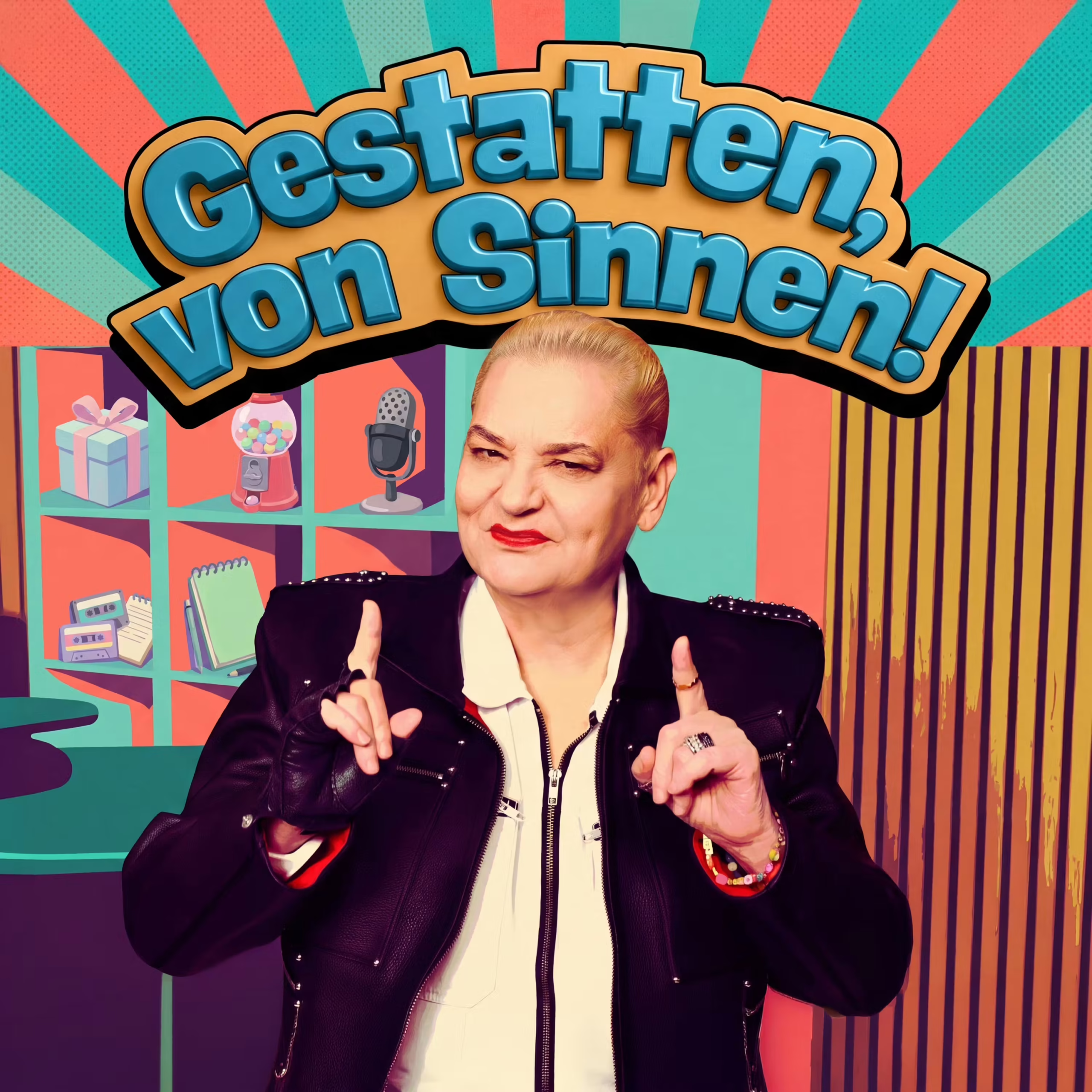
Gestatten, von Sinnen! – Gespräche mit Hella von Sinnen
Hella von Sinnen zeigt sich im Podcast „Gestatten, von Sinnen!“ von ihrer persönlichen Seite und schafft Raum für humorvolle, ehrliche Gespräche.
Zwischen Fernsehlegende und neugieriger Zuhörerin
Seit Jahrzehnten gehört Hella von Sinnen zu den prägendsten Persönlichkeiten der deutschen Unterhaltungslandschaft. Laut, schlagfertig, exzentrisch und stets mit einer klaren Haltung – so kennt das Publikum die Moderatorin, Komikerin und Schauspielerin. Mit ihrem neuen Video-Podcast Gestatten, von Sinnen! zeigt sie nun jedoch eine Seite, die im Fernsehen oft hinter ihrer Bühnenpräsenz verschwand: die aufmerksame Zuhörerin.
Produziert von RE*PLAY, einer Marke von Raab Entertainment, lädt Hella von Sinnen alle zwei Wochen prominente Gäste, langjährige Wegbegleiter:innen und Freund:innen in ihr Wohnzimmer-Studio ein. Statt klassischer Promi-Interviews entstehen Gespräche, die persönliche Erinnerungen, gesellschaftliche Themen und humorvolle Anekdoten miteinander verbinden. Ein wiederkehrendes Element ist dabei der “Kaugummiautomat der Gefühle”, der den Begegnungen eine spielerische und zugleich emotionale Ebene verleiht.1
Wer ist Hella von Sinnen?
Hella von Sinnen zählt seit den 1980er-Jahren zu den bekanntesten Entertainerinnen Deutschlands. Ihren Durchbruch feierte sie mit Formaten wie Alles Nichts Oder?!, später wurde sie durch Genial daneben zu einer festen Größe der deutschen Fernsehunterhaltung. Ihr Markenzeichen waren dabei nie nur extravagante Outfits oder pointierte Schlagfertigkeit, sondern auch ihr konsequentes Eintreten gegen Diskriminierung sowie für die Sichtbarkeit der LGBTQIA+ Community.
Als eine der ersten offen lesbischen Persönlichkeiten im deutschen Fernsehen hat sie gesellschaftliche Debatten lange vorangetrieben, bevor Diversität zu einem festen Bestandteil medialer Diskurse wurde. Gerade diese Mischung aus Unterhaltung und Haltung prägt bis heute ihre öffentliche Wahrnehmung.
Ein Podcast gegen Oberflächlichkeit
Bemerkenswert ist dabei eine überraschende Tatsache: Hella von Sinnen selbst hörte bis vor Kurzem kaum Podcasts. Sie bezeichnet sich vielmehr als leidenschaftliche Serien- und Filmliebhaberin sowie Comic-Leserin. Erst das hybride Format aus Video und Audio überzeugte sie, weil es ihrer visuellen Arbeitsweise entgegenkommt und gleichzeitig Raum für intensive Gespräche schafft.2
Diese Offenheit spiegelt sich auch im Konzept wider. Wo viele Interviewformate auf schnelle Schlagzeilen oder virale Ausschnitte setzen, nimmt sich Gestatten, von Sinnen! Zeit. Gäste erzählen ihre Lebensgeschichten, sprechen über Erfolge ebenso wie über Krisen, während Hella immer wieder beweist, dass sie weniger an Selbstdarstellung als an den Menschen hinter der öffentlichen Figur interessiert ist.
Zu den bisherigen Gästen gehören unter anderem Mike Krüger und Evelyn Burdecki – Persönlichkeiten, mit denen Hella nicht nur berufliche Berührungspunkte verbindet, sondern oftmals jahrzehntelange Freundschaften. Gerade diese Vertrautheit sorgt für authentische Momente, die weit über klassische Talkshow-Interviews hinausgehen.3
Mehr als Nostalgie
Auf den ersten Blick mag Gestatten, von Sinnen! wie ein nostalgisches Wiedersehen mit bekannten Fernsehgesichtern wirken. Tatsächlich zeigt der Podcast jedoch, dass klassische Unterhaltungspersönlichkeiten auch im digitalen Zeitalter neue Erzählformen finden können.
Hella von Sinnen bringt dabei ihre jahrzehntelange Medienerfahrung mit einer überraschenden Gelassenheit zusammen. Sie unterbricht ihre Gäste selten, lässt Geschichten wirken und schafft dadurch eine Atmosphäre, die eher an ein langes Gespräch unter Freunden erinnert als an ein durchgetaktetes Medienformat. Gerade diese Ruhe hebt den Podcast von vielen aktuellen Produktionen ab.
Zwischen Generationen und Medienwelten
Mit ihrem Einstieg in die Podcast-Welt schlägt Hella von Sinnen zugleich eine Brücke zwischen analoger Fernsehgeschichte und digitaler Medienkultur. Für ein jüngeres Publikum eröffnet sich die Möglichkeit, eine Ikone des deutschen Fernsehens neu kennenzulernen, während langjährige Fans eine persönlichere Seite der Entertainerin erleben.

Hella von Sinnen bei der Deutschlandpremiere von “Mara und der Feuerbringer”, am 29. März 2015, im Cinedom Köln, © 9EkieraM1 Dabei beweist Gestatten, von Sinnen!, dass gute Gespräche keiner lauten Inszenierung bedürfen. Vielmehr lebt das Format von echter Neugier, Empathie und der Bereitschaft, Menschen Raum für ihre Geschichten zu geben.
Fazit
Gestatten, von Sinnen! ist weniger ein klassischer Promi-Podcast als ein Porträt menschlicher Begegnungen. Hella von Sinnen nutzt ihre Bekanntheit nicht, um im Mittelpunkt zu stehen, sondern um Gespräche zu ermöglichen, die zugleich humorvoll, nostalgisch und überraschend tiefgründig sind. In einer Medienlandschaft, die häufig auf Geschwindigkeit und Aufmerksamkeit optimiert ist, wirkt genau diese Form des Zuhörens beinahe erfrischend zeitlos.
Taged as/in; Begegnung, Comedy, Deutschland, entertainment, gespräch, Hella von Sinnen, Interview, Medien, Moderatorin, Podcast, Popkultur, Prominente, REPLAY, TALK, Unterhaltung, Video Podcast#writtenby:

-

Fotografiska und Estée Lauder Companies: „One in Eight“
Fotografiska und die Brustkrebs-Kampagne der Estée Lauder Companies starten “One in Eight” mit einem Open Call für Künstler:innen.
Internationale Initiative macht persönliche Perspektiven auf Brustkrebs sichtbar
Ein globaler Open Call lädt aufstrebende Künstler:innen dazu ein, persönliche Perspektiven auf Brustkrebs fotografisch sichtbar zu machen. Gleichzeitig markiert er den Auftakt einer länderübergreifenden Partnerschaft zwischen Fotografiska und der Brustkrebs-Kampagne der Estée Lauder Companies in Deutschland, Österreich, der Schweiz und Schweden.
Mit „One in Eight“ entsteht eine neue kulturelle Initiative. Sie nutzt die Kraft der Fotografie. Dadurch wird Brustkrebs stärker in den gesellschaftlichen Dialog gebracht – sichtbarer, offener und menschlicher.
Seit mehr als 30 Jahren engagiert sich die Brustkrebs-Kampagne der Estée Lauder Companies weltweit für Aufklärung. Sie setzt sich für lebensrettende Forschung ein. Die Kampagne bietet Bildungs- und Unterstützungsangebote. Die Kampagne 2026 beginnt ein neues kulturelles Kapitel mit der Partnerschaft mit Fotografiska. Dies geschieht in Zusammenarbeit mit einer der international führenden Institutionen für Fotografie und visuelle Kultur.
Globaler Open Call für aufstrebende Künstler:innen
Zum Auftakt startet heute ein weltweiter Open Call über Fotografiska Emerging. Aufstrebende Fotograf:innen und visuelle Künstler:innen sind eingeladen, Arbeiten einzureichen. Diese Arbeiten sollen eine authentische Perspektive darauf zeigen. Sie sollen zeigen, was es bedeutet, direkt oder indirekt von Brustkrebs betroffen zu sein.
KI-generierte Bilder sind nicht zugelassen. Jede Einreichung sollte von einer kurzen Bildbeschreibung begleitet werden, welche die Geschichte oder Perspektive hinter der Arbeit erläutert.
Einreichungen sind bis zum 12. August 2026, 10:00 Uhr, möglich.
Fotografie als Medium für Sichtbarkeit und Dialog
One in Eight markiert zugleich einen wichtigen Meilenstein für die Brustkrebs-Kampagne der Estée Lauder Companies. Erstmals wird ein gemeinsames kreatives Konzept über mehrere Märkte hinweg umgesetzt – mit Aktivierungen in Deutschland, Österreich, der Schweiz und Schweden.
Die Initiative verbindet die kulturelle Plattform von Fotografiska mit dem langjährigen Engagement der Estée Lauder Companies. Zudem nutzt sie die Expertise lokaler gemeinnütziger Partnerorganisationen. Diese Organisationen begleiten Menschen mit Brustkrebs unmittelbar.
Im Zentrum steht die Überzeugung, dass Fotografie sichtbar machen kann, was häufig unsichtbar bleibt. Künstler:innen teilen intime, respektvolle und authentische Perspektiven. So sollen Tabus aufgebrochen und Gespräche angestoßen werden. Themen wie Aufklärung, Früherkennung, Fürsorge und Gemeinschaft werden dadurch stärker in den öffentlichen Fokus gerückt.
Ausstellung im Brustkrebsmonat Oktober
Eine Jury aus dem kuratorischen Team von Fotografiska, Vertreter:innen der Estée Lauder Companies sowie lokalen NGO-Partnerorganisationen wählt zehn Arbeiten aus.
Die ausgewählten Werke werden im Oktober 2026, dem internationalen Brustkrebsmonat, bei Fotografiska Berlin und Fotografiska Stockholm präsentiert. Darüber hinaus wird die Initiative durch besondere Ausstellungsevents in Berlin, Stockholm, Zürich, Wien und München erlebbar.
Jede:r ausgewählte Künstler:in erhält ein Preisgeld von 1.500 Euro und wird im Rahmen der Kommunikation von Fotografiska, der Brustkrebs-Kampagne der Estée Lauder Companies sowie ausgewählter lokaler Aktivierungen vorgestellt.
Um die Wirkung der Initiative über die Ausstellungen hinaus zu verlängern, werden Printposter aller zehn prämierten Arbeiten verkauft. Sämtliche Nettoerlöse fließen an die beteiligten gemeinnützigen Partnerorganisationen, die Menschen mit Brustkrebs in den jeweiligen Ländern unterstützen.
Lokale Partner stärken die Initiative
In Deutschland zählt dasBuusenkollektiv e.V. zu den lokalen Partnern der Initiative. Die Organisation setzt sich für Aufklärung, Austausch und Community-Arbeit rund um Brustkrebs ein.
Darüber hinaus begleitet FRAUEN100 One in Eight als Co-Host des Berliner Gala-Moments und unterstützt dabei, die Initiative authentisch und wirkungsvoll an der Schnittstelle von Kultur, Awareness und Gemeinschaft umzusetzen.
Im Oktober 2026 wird One in Eight durch besondere Ausstellungsevents in Berlin und München aktiviert. Weitere Informationen zum Programm werden im Vorfeld des Brustkrebsmonats bekannt gegeben.
Stimmen zur Initiative
„Brustkrebs ist zutiefst persönlich – und doch bleiben viele Erfahrungen zu oft unsichtbar oder unausgesprochen“
Linda Hoeck, General Manager der Estée Lauder Companies DACH.„Seit mehr als drei Jahrzehnten steht die Brustkrebs-Kampagne der Estée Lauder Companies für Aufklärung, Handeln und die Überzeugung, dass wir dazu beitragen können, eine Welt ohne Brustkrebs zu schaffen. Aber das können wir nicht allein. Wir brauchen starke Partner, die Seite an Seite mit uns stehen – Partner, die Glaubwürdigkeit, kulturelle Relevanz und eine tiefe Verbindung zu Communities mitbringen. Gemeinsam mit Fotografiska und unseren lokalen NGO-Partnern möchten wir die Kraft der Fotografie nutzen, um persönliche Perspektiven sichtbar zu machen, Dialog anzustoßen und Aufmerksamkeit in konkrete Unterstützung zu verwandeln.“
Auch Fotografiska sieht in der Initiative die Möglichkeit, gesellschaftlich relevante Themen durch Kunst sichtbar zu machen.
„Fotografie war schon immer ein Medium, das uns mit dem verbindet, was real ist.“
Pauline Benthede, Global Vice President Artistic Direction and Exhibitions bei Fotografiska.„Mit One in Eight möchten wir aufstrebenden Künstlerinnen und Künstlern eine Plattform geben, um sich dem Thema Brustkrebs mit Ehrlichkeit, Sensibilität und künstlerischer Stärke zu nähern. Als Kulturinstitution haben wir die Verantwortung, unsere Plattform für relevante Gespräche zu nutzen, indem wir persönliche Perspektiven in den öffentlichen Raum bringen und Momente der Verbindung für Künstler:innen, Publikum und Communities schaffen.“
Einreichung und weitere Informationen
Künstler:innen können ihre Arbeiten über Fotografiska Emerging einreichen. Weitere Informationen und Teilnahmebedingungen finden sich unter:
https://emerging.fotografiska.com/missions/one-in-eight
Über die Brustkrebs-Kampagne der Estée Lauder Companies
Die Brustkrebs-Kampagne der Estée Lauder Companies wurde 1992 von Evelyn H. Lauder ins Leben gerufen und verfolgt das Ziel, eine Welt ohne Brustkrebs zu schaffen. Evelyn H. Lauder war zudem Mitinitiatorin der Pink Ribbon, die heute weltweit als Symbol der Brustkrebsaufklärung gilt.
Seit mehr als drei Jahrzehnten engagieren sich die Estée Lauder Companies weltweit für Aufklärung, Bildung sowie die Finanzierung lebensrettender Forschung und medizinischer Angebote. Gemeinsam mit der Estée Lauder Companies Charitable Foundation wurden bislang mehr als 156 Millionen US-Dollar bereitgestellt. Davon gingen über 123 Millionen US-Dollar an Forschungsprojekte der Breast Cancer Research Foundation®.
Die Kampagne setzt sich weiterhin dafür ein. Sie will die Themen Aufklärung, Früherkennung, Forschung, Fürsorge und Gemeinschaft nachhaltig im öffentlichen Bewusstsein verankern.
Über Fotografiska

Image by © Johanna-Berghorn “Mama Mio” Fotografiska wurde 2010 in Stockholm gegründet und ist heute ein internationaler Ort für Fotografie, Kunst und Kultur mit Standorten in Stockholm, Berlin, Tallinn und Shanghai. Die Institution versteht sich als Plattform für zeitgenössische Fotografie und gesellschaftlichen Dialog.
Mit Fotografiska Emerging unterstützt Fotografiska die nächste Generation von Fotograf:innen und visuellen Künstler:innen durch internationale Open Calls, redaktionelle Formate und Ausstellungsmöglichkeiten.
Taged as/in; art, Artists, awareness, berlin, Breast Cancer, Campaign, community, contemporary photography, culture, dialogue, Estée Lauder Companies, exhibition, Fotografiska, Fotografiska Emerging, global, health, OPEN CALL, Photography, Pink Ribbon, Stockholm, storytelling, visual arts, women#writtenby:

Wanna Sign in too?
Stay tuned with the arts!
Subscribe to our newsletter and stay informed about current exhibitions and other topics of the Berlin cultural scene.


Read more about the handling of your data here.
You must be logged in to post a comment.