

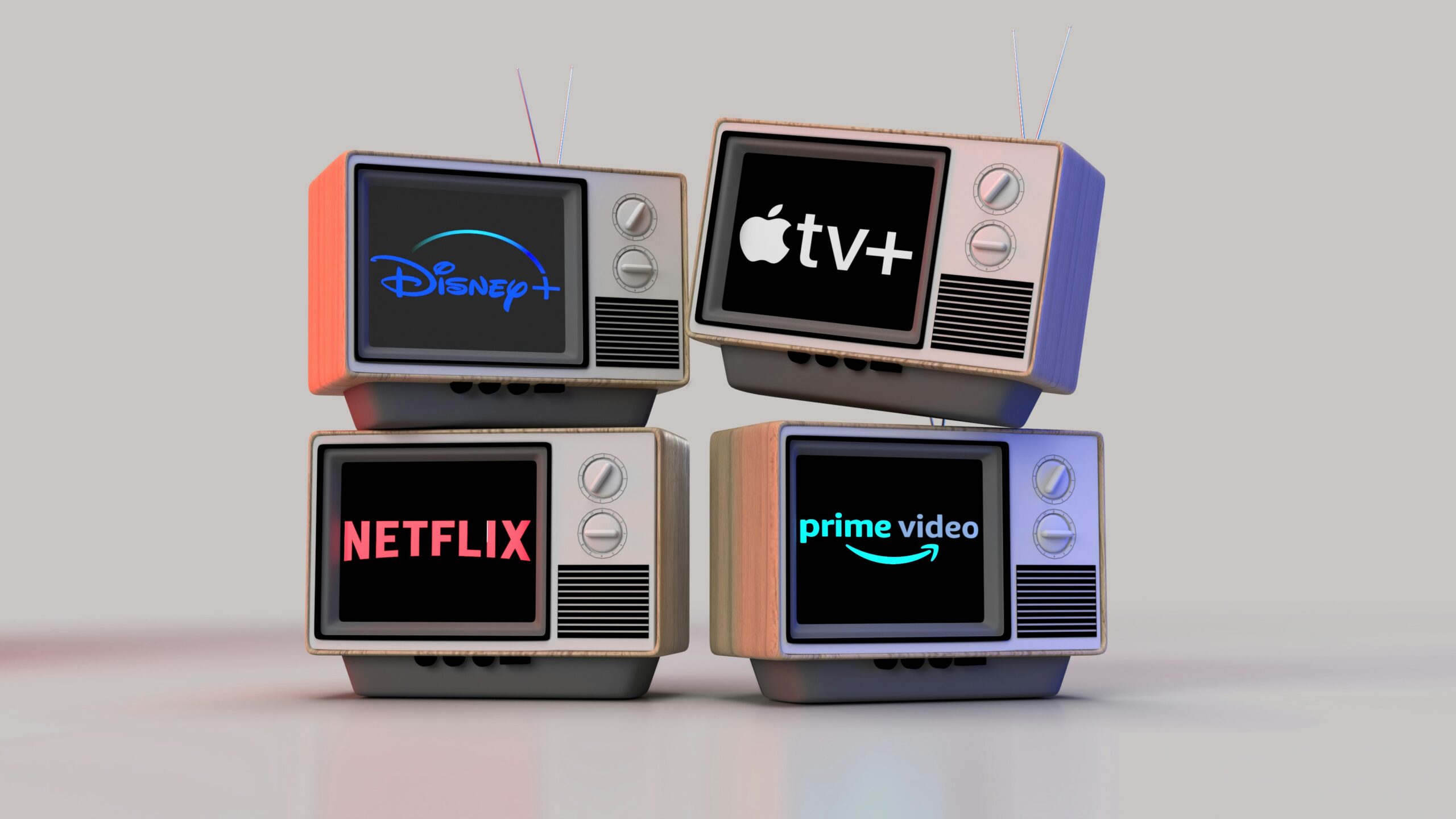

There is a particular genius, if we must call it that, to the game now being played at scale across the technology and consumer goods industries. The rules are simple: raise prices incrementally, reduce features quietly, rebrand the resulting hollowness as a “streamlined experience,” and wait. The customers, burdened by inertia and switching costs, will almost certainly stay. The few who leave will be replaced by new users who have no memory of what the product used to be. Call it the slow extraction. Call it shrinkflation for the digital age. Or simply what it is: a systematic betrayal of the people who made these companies rich.
The strategy did not emerge from malice alone. It emerged from a specific convergence of market conditions: the maturation of once-hypergrowth platforms, the post-pandemic evaporation of cheap capital, and the relentless demand from investors for profitability over user goodwill. What was once funded by venture euphoria now has to be extracted from the people already inside the system.
“The customer is no longer the user to be delighted. The customer is the resource to be optimized.”
The anatomy of a price hike
Consider the streaming industry, which spent a decade building its audience on a promise so simple it felt almost naive: unlimited content for less than ten dollars a month. That promise was, of course, a loss leader — a land-grab disguised as a service. Netflix, Spotify, Disney+, and their peers understood that once a viewer’s watch history, playlist, and cultural habits were embedded in a platform, the cost of leaving became psychological as much as financial. They were not wrong. And now they are collecting.
Netflix has raised its standard plan price more than five times since 2014, added an advertising tier that effectively downgrades the experience for price-sensitive users, and eliminated the cheap entry point that once made the service a genuine alternative to cable.
Spotify, despite paying artists a fraction of a cent per stream and despite seventeen years of losses, recently increased prices in dozens of markets simultaneously. The justification offered — that users are getting “more value” — deserves to be examined with the same generosity one extends to a pickpocket explaining he needed the wallet more than you did.
Selected examples — paying more, receiving less
| Netflix | Eliminated cheapest ad-free plan; 5th price hike in a decade | +87% since 2014 |
| Adobe CC | Buried annual cancellation fees; features moved to higher tiers | Settled FTC lawsuit |
| Twitter / X | Free tier throttled; verification pay-walled; API closed | Legacy features removed |
| Amazon Prime | Ads added to Prime Video without price reduction | Pay again to remove |
| LinkedIn Premium | Repeated price increases; AI features justify new tier | +40% in two years |
| Apple One | Bundled services raised together; iCloud storage plans hiked | Lock-in by design |
The subscription trap
The more insidious element is not the price hike itself but the architecture built around it. Subscription models, when deployed honestly, offer genuine mutual benefit: predictable revenue for the company, continuous improvement for the user. What has evolved instead is something closer to a ransom structure.
Adobe made this explicit when the FTC sued the company in 2024 for hiding early-cancellation fees deep inside its sign-up flow — fees that could run to hundreds of dollars. The subscription was not designed to be cancelled. It was designed to make cancellation painful enough that most people would not bother.

This is not an outlier. It is the template. “Dark patterns” — interface designs that manipulate users into purchases, renewals, and opt-ins they did not consciously choose — have been documented across hundreds of platforms. Roach motel design: easy to get in, nearly impossible to get out. The gym membership of the digital economy, scaled to hundreds of millions of users.
Artificial intelligence as the newest pretext
The arrival of generative AI has provided the industry with a remarkable new justification engine. Suddenly, every existing product that has added a chatbot button or an “AI-powered” summary feature is worth significantly more money. Microsoft raised the price of its 365 suite. Notion, Linear, and a cascade of productivity tools introduced AI add-ons priced at a premium — for features that, in most cases, users had not requested and will rarely use.
The AI tax, as it has come to be known informally, has the elegant property of being almost impossible to argue against: who could be opposed to artificial intelligence? The question of whether the AI feature actually improves the product for most users is swallowed by the ambient cultural prestige of the technology itself.
What is being sold is not intelligence. It is the idea of intelligence — a symbolic upgrade that costs the provider pennies in compute and returns many dollars in increased subscription revenue. The product has not substantially changed. The price has.
“Who could argue against artificial intelligence? The question of whether it improves the product is swallowed by the ambient cultural prestige of the technology.”
The loyalty penalty
Perhaps the most quietly infuriating dimension of this phenomenon is what economists call the loyalty penalty: the fact that long-term customers, the ones who stayed through the lean years and built a product’s reputation by word of mouth, are systematically charged more than new users. Every cable company, insurance provider, and subscription platform knows this. Newcomers receive promotional pricing. Loyal users, whose inertia and attachment make them captive, pay the full rate and often more. The reward for loyalty is extraction.
The tech industry, which long presented itself as the antithesis of rapacious old-media conglomerates, has reproduced this dynamic with a perfection that would impress any legacy telco. The user who has been on Spotify since 2012, who helped evangelize the platform to friends and family, who built fourteen years of listening history into its algorithm — that user is worth more to the company precisely because they are less likely to leave. They will pay the new price. They almost certainly already have.
What is owed
Regulation has been slow, for the usual reasons. Consumer protection agencies are under-resourced, technically outmatched, and operating under legal frameworks that predate the subscription economy by decades. The FTC’s action against Adobe was notable precisely because such actions are rare.
Class-action litigation provides some deterrence but mostly enriches lawyers. Individual consumer choice, theoretically the corrective mechanism in a functioning market, is substantially impaired by the switching costs, data lock-in, and network effects these platforms have spent years engineering.

None of this is to say that companies should not charge for their products, or that price increases are inherently illegitimate. It is to say that there is a difference between honest pricing and a strategy of deliberate obfuscation — between a company that raises prices transparently and stands behind the value it delivers, and one that quietly downgrades its product, hides its fees, engineers its off-ramps to be impassable, and dresses the whole exercise in the language of customer love.
The latter is not a pricing strategy. It is a relationship built on contempt. And the people inside it should recognize it for what it is.
Sources:
Netflix price history
- A 94% increase: A timeline of Netflix price hikes — Android Authority – Android Authority · July 2024, Standard plan up 94% in 12 years; price hike timeline since 2011
- Netflix Price Increases 2026: Every Plan Compared — JustCancel – JustCancel · February 2026, Netflix raised US prices 7 times since 2014; Standard plan 100% increase over 11 years; Basic plan eliminated 2024
- Netflix raises prices for all US plans — ABC News – ABC News · January 2025, January 2025 price hike; Standard rises to $17.99; 302 million subscribers
- Netflix Pricing Changes — PriceTimeline – PriceTimeline · updated continuously, Full historical pricing table, all tiers, all years
Spotify price increases
- Spotify price increased again — CNBC – CNBC · June 2024, Second US price hike in a year; individual plan to $11.99
- Adjusting Our Spotify Premium Prices — Spotify Newsroom – Spotify · July 2023, Official statement on 2023 simultaneous price increases across 50+ markets
- Spotify just announced another price hike. Here’s what’s really driving it — Fast Company – Fast Company · January 2026, Third US price hike since 2011; investor pressure as saturation approaches
Adobe FTC lawsuit & settlement
- FTC Takes Action Against Adobe — Federal Trade Commission – FTC.gov · June 2024, Official FTC complaint; hidden 50% early termination fee; deliberately obstructed cancellation
- Adobe Agrees to $150 Million Settlement — US Dept. of Justice – DOJ · 2025, 150M settlement; Adobe required to clearly disclose fees and provide easy cancellation going forward
- Adobe’s hidden early termination fee is “like heroin,” exec says — Top Class Actions – Top Class Actions · August 2024, Unredacted complaint revealed Adobe executive described ETF as “a bit like heroin for Adobe”
Amazon Prime Video ads
- Amazon to run ads with Prime Video — CBS News – CBS News · September 2023, Ads added to previously ad-free tier; paying to remove them amounts to 26–33% price increase
- Amazon to Hike Fee for Prime Video Ad-Free Tier to $5/month — Variety – Variety · March 2026, Ad-free surcharge raised again to $4.99/month; ad load has roughly doubled since launch
- Amazon Prime Video has ads now. Here’s how to stop them — PCWorld – PCWorld · updated 2026, Ad load doubled from ~2–3 min/hour at launch to ~4–6 min/hour by 2025
Dark patterns — research & regulation
- FTC/ICPEN/GPEN Results: Dark Patterns in Subscription Services — FTC – FTC.gov · July 2024, 76% of 642 subscription sites used at least one dark pattern; 67% used multiple; 27 authorities in 26 countries
- FTC study finds dark patterns used by majority of subscription apps — TechCrunch – TechCrunch · July 2024, 81% of sites prevented turning off auto-renewal; 70% provided no cancellation info; 66% required payment info for free trials
- Six dark patterns used to manipulate you when shopping online — OECD – OECD · September 2024, OECD taxonomy of dark patterns; EU Digital Services Act enshrines ban on dark patterns
Leave a comment.