

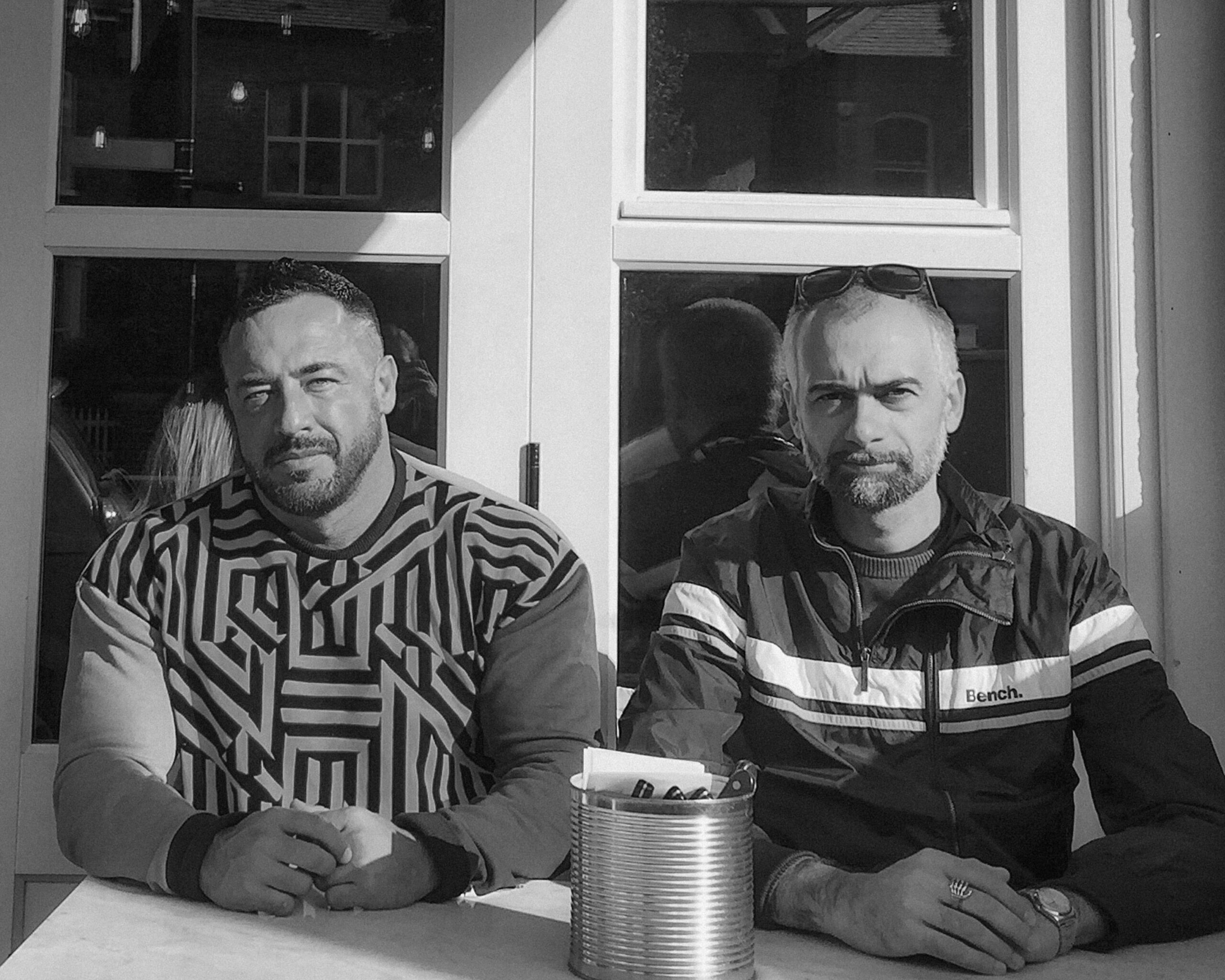
In an era of endless digital presets and clinical software perfection, Massimo Paramour and Gianluca Pighi are staging a quiet, analog revolution. Their collaborative project, OH!, is a testament to the power of tactile creation and the warmth of vintage circuitry. Their debut album, We Come In Peace, is a 16-track odyssey that defies modern convenience, recorded with a strict “No VSTs, no samples” philosophy at the serene Elfo Studio in the Italian countryside.
Despite living in different countries, the duo boasted vast, independent careers. Their work spans everything from Goth and Industrial to Soulful House and Jazz-Funk. They found common ground in the shared isolation of the pandemic. What emerged is a lush, synth-pop landscape bolstered by a global cast of collaborators including Local Suicide, Tareq, Sarah P., Fred Ventura and Alexander Price.
Today, we dive into the hardware-driven world of OH! to discuss the “ping-pong” process of remote collaboration, the physical thrill of analog gear, and the logistical puzzle of bringing a multi-national studio masterpiece to life.
Pre-order OH!’s debut album We Come In Peace on vinyl here
Interview with Massimo Paramour and Gianluca Pighi

Massimo and Gianluca, you’ve both had extensive solo careers in production and it seems that you have known each other for a while. How did you first meet and what was the catalyst that brought you together to form OH! and create We Come In Peace?
M. We met in 2001 through a mutual friend. I was living and producing music in NYC at the time but back in Italy on holiday. Gianluca was working as a DJ and was looking for musicians to start producing music with. We went to his studio and clicked immediately. Our first release was Kadregah “Chairs,” and after that we continued collaborating on several other projects, all mainly aimed at the dancefloor.
When COVID hit and we suddenly had a lot more time on our hands, we felt the need to step away from that context and start something that reflected our broader musical backgrounds.
G. During Covid, it was almost natural, having a lot more time to focus on musical research, almost an inner journey, to channel ideas into a single project, which eventually became “We Come in Peace”.
Living in different countries presents a unique logistical challenge. How do you manage your collaborative workflow – particularly given your strict adherence to a purely analog, hardware-driven process?
We basically started with basic ideas—basslines, riffs, drum loops—that we sent to each other and developed through a sort of ping-pong process. Once we had some solid demos, including vocals, we brought everything into the studio, set up the analog gear, and re-recorded it all, adding acoustic drums, guitar, and bass.
Recording 100% on hardware with pure analog signal paths is a massive commitment. What drove the strict “No VSTs, no samples” philosophy for this project?
M. After years of working almost entirely with plugins and virtual instruments, we felt the need to reconnect with the excitement of making music in a more direct, physical way. It comes with limitations, of course, but also real advantages—a thicker, warmer sound, especially when using analog equipment.
G. Certain limitations also suggested new ideas and different sonic landscapes that software somehow tends to “mask.”
You recorded at Elfo Studio in the Piacenza countryside. Did the physical environment influence the atmosphere and mood of the album?
M. When we arrived at Elfo Studio, the songs were already written, but it was incredibly exciting to hear them come to life with a real band. The studio is just a few miles from our hometown, so we immediately felt at home. Alberto Callegari, who owns the studio, is a longtime friend. We were also in a band together back in the ’80s, and he made the whole process very comfortable for us.
G. Elfo is a fantastic studio, both acoustically and technically speaking. Alberto has specialized in recording and has an extensive microphone collection. On top of that, its location away from the chaos of the city helps concentration and improves the workflow.
You have a massive global cast of vocalists, from Local Suicide, Sarah P to Fred Ventura, Tareq, Alexander Price and more. How did each of these collaborations come about?
M. Most of the collaborators are good friends. With some, we had already worked individually in the past; with others, we still have ongoing projects. It was during COVID. Everyone was stuck, unsure of what would happen next, but with a lot of time and ideas. It felt very natural to start sharing music and working together remotely.
G. Over the years, having worked with so many artists, we built relationships that gave us the ability to involve them in the project, while always maintaining a consistent artistic and professional direction.
Translating a strictly hardware-driven, 16-track studio album to a live setting can be a logistical challenge. Are there plans to take OH! on the road, and if so, how much of this vintage gear are you bringing with you?
So far, we haven’t really discussed taking the album on the road. The main challenge wouldn’t be the gear, but bringing all the featured singers together at once, as we all live in different countries—the UK, USA, Italy, and Greece.
If we do play live, we’d probably create something quite different from the album, probably with some of the featured artists, but more instrumental tracks. But things might change.
What is the main feeling or message you want listeners to take away when they press play on We Come In Peace for the very first time?
Although the album is strongly rooted in early ’80s synth-pop, it’s also quite eclectic, just like our influences. The key is to let go and enjoy the journey from start to finish.

Both of you have established, prolific careers outside of this duo – from Massimo’s extensive production and remix work to Gianluca’s deep roots in soulful house and beyond. How do your individual solo projects feed into the creative DNA of OH!, and what are you both currently working on independently?
M: My musical background is deeply rooted in electronic music. From an early age, I was drawn to New Wave, Goth, and Industrial, so it felt very natural to bring some of those elements into OH!, even within a more pop-oriented context.
At the same time, I’ve always moved in different directions creatively. I stay busy in the studio, producing and co-arranging for various independent artists. One of the latest projects I’ve worked on is a new EP by Alexander Price. I’m also collaborating with Gianluca on other parallel projects and planning a few experimental live gigs with Dee Sada. There are also a few things I’d love to release personally before the end of the year. We’ll see how it goes.
G. My musical background is quite different from Massimo’s. I used to listen from early hip-hop, soul and funk to Krautrock and electronic records like Klaus Schulze or Tangerine Dream. The blending of our two backgrounds helped shape ideas into something with a very clear identity.
I’m currently working on several projects, including a jazz-funk album by a very well-known Italian trumpeter, Davide Ghidoni, and I’m producing some deep tech tracks for emerging artists.
We Come In Peace feels like a monumental achievement and a massive undertaking. Now that this 16-track analog odyssey is out in the world, what is next for OH!?
Besides releasing a few remixes from the album, we already have a number of instrumental tracks that we might develop into a new EP, or even a follow-up album, depending on how “We Come In Peace” is received.
You must be logged in to post a comment.