

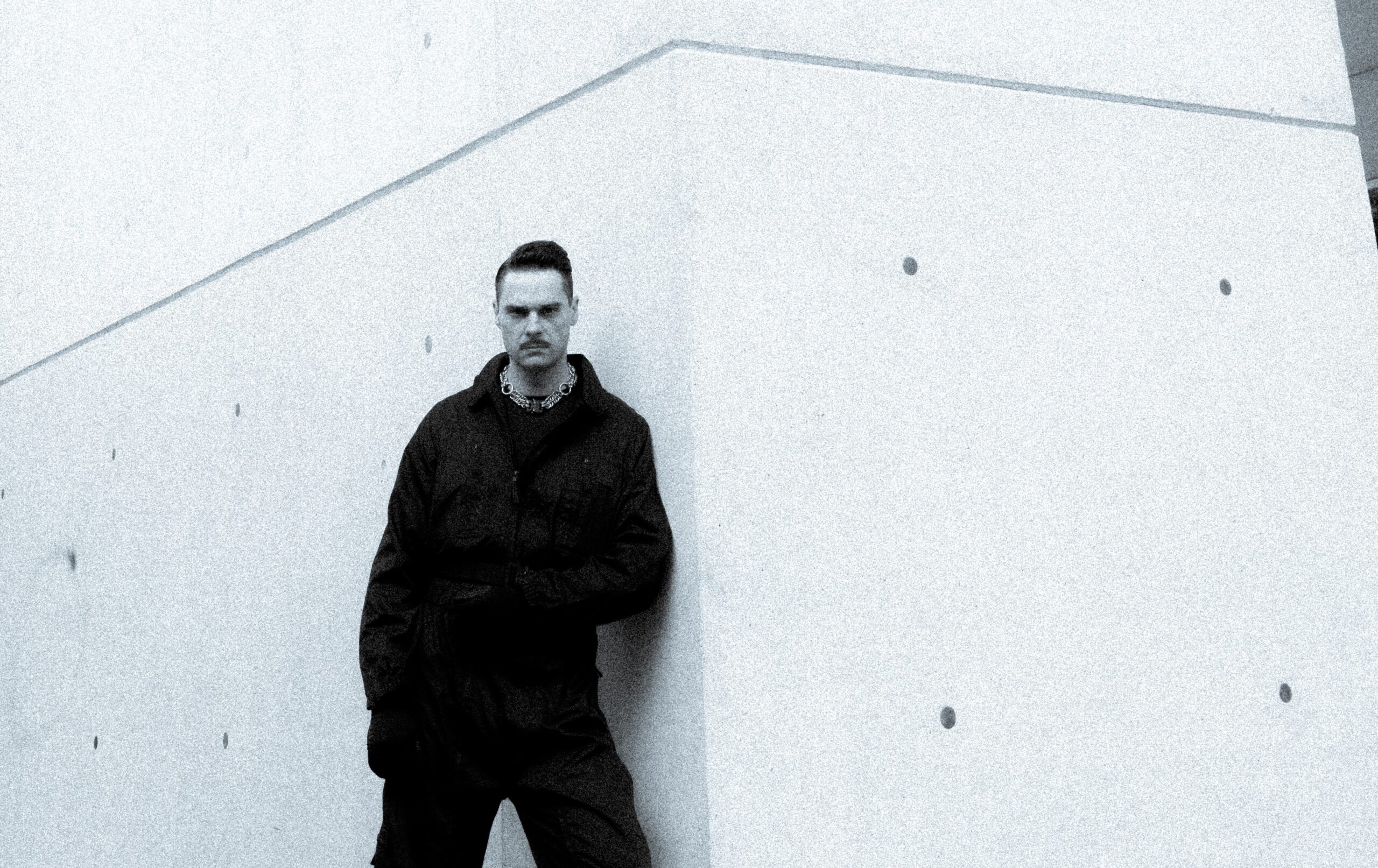
Berlin’s dark electronic scene is constantly shifting, but few artists navigate its shadows as purposefully as Johannes Stabel, the creative force behind XTR HUMAN and Wie Ein Gott Records. Known for a signature sound that stitches together the cold precision of EBM with the dramatic flair of 80s darkwave. Now Stabel is pushing his project into high-voltage territory.
His latest single, “RAVE GOD“, is a sonic collision of eras. It captures the frantic, neon-soaked euphoria of 90s rave culture and grounds it with the heavy, industrial muscle of modern EBM. But beneath the aggressive basslines lies a layer of sharp irony. Poking fun at the “TikTok-ification” of club culture and the modern obsession with bouncer-dodging and gatekept dancefloors.
From his roots in the black metal scene to his deep-seated love for German-language pioneers like DAF and Falco, Stabel’s influences are as varied as the cities he calls home. We sat down with the Berlin-based artist to discuss the contrast between LA sunshine and German underground. Uncovering the production secrets behind his piercing synth leads, and why the “Rave God” title isn’t quite as serious as it sounds.

Your new single RAVE GOD blends 90s rave euphoria with heavy EBM energy. How did the idea for the track first come about?
I wanted to do a really energetic track that works well in a live set and is fun to play. At the moment, I’m exploring more 90s influences and trying to move a bit away from the more classic EBM sound, so it doesn’t always feel like repeating the same 80s formulas.
It’s not the first track in that direction though, I already explored that with “Sledgehammer” and also “Abgrund”, so this felt like a pretty natural continuation.
The song feels both aggressive and ecstatic at the same time. What emotions or experiences were you trying to capture with it?
The track is kind of about losing yourself in the club environment. There’s this mix of a really intense, almost euphoric experience, but also a certain pressure that comes with it.
I was also thinking about these TikTok-type narratives, where people talk about trying to get into clubs, or not getting in, and it becomes this very exaggerated, almost touristy version of club culture.
So the idea was to reflect that ambivalence, between having a great night out and at the same time this hype and expectation around clubs, where people sometimes end up in places that don’t really match what they’re actually looking for.
The title RAVE GOD is quite powerful. What does that phrase mean to you personally?
You should definitely take it with a bit of irony. It’s again connected to this whole TikTok culture, where people explain how to get into clubs like Berghain, or even use apps where you can simulate getting past the bouncer.
So it’s a bit over the top and plays with that idea in a slightly exaggerated way.
Sonically, the track touches on the spirit of 90s rave culture. What draws you to that era of electronic music?
To be honest, back in the 90s I wasn’t listening to rave at all, I was more into black metal. So it’s not like I come from that scene originally.
But I find it really interesting to bring some of those elements into my music now, because they can actually work very well with EBM and make the rhythms more dynamic.
Bands like Brutalismus 3000 really inspired me in that sense, especially how they approached it on their record Goodbye Salo.
Can you tell us about the production process?
I write everything at home in my studio, mostly with synthesizers, but I also use quite a lot of plugins. For “RAVE GOD” I used Serum a lot, because it has sounds that really cut through the mix.
Usually I would replace some of those sounds later with analog gear, but it’s a good starting point.
The single also includes a remix by Houses of Heaven. How did that collaboration come about?
I’ve known them for quite a while. The first time I played in LA, I supported them, and that’s how we initially connected.
Since then, we stayed in touch and got a bit closer, also because of my friend Matia, who produced all of their albums. So there’s a shared connection there, and the collaboration came together quite naturally.
The video tells the story of a transition from the bright LA lifestyle to Berlin’s darker underground. What inspired this narrative?
It’s actually quite personal. Over the past years, I built a stronger connection to the US, made a lot of friends there, and really got into the scene.
At the same time, I’ve been living in Berlin for a long time and still feel very connected to it. Especially LA, with this sunny West Coast lifestyle, is kind of the opposite of Berlin, and that contrast really fascinates me.
We had the chance to film in both cities, so the idea was to connect them and show my appreciation for both worlds.
Your vocals have a deep, dramatic quality reminiscent of 80s darkwave. Which singers or bands influenced your vocal style?
I wouldn’t say it comes only from classic darkwave or post-punk artists. Because I sing in German, I’m quite specific about what I like vocally.
A lot of my influences actually come from German artists, especially from the 80s, like Falco or bands like Abwärts, DAF and Fehlfarben.
So it’s more rooted in German-language pop and wave from that era.
Berlin has a long history of underground electronic and post-punk culture. How has living in the city shaped your sound?
There was a reason why I moved to Berlin. Back then, around ten years ago, the scene felt even more active than today. There were a lot of shows, with bands from darkwave, post-punk, and industrial coming from the US and all over Europe.
There was a strong sense of connection and exchange, and that definitely shaped my taste. I’ve always been interested in influences from different countries, and Berlin was a place where that kind of international community really came together.
When you start writing a track, do you usually begin with rhythm, melody, or lyrics?
I usually start with the kick and the bass, because that’s the most important foundation, especially for club music. It’s quite technical in a way, finding the right combination in terms of frequency and scale so everything works well together and has the right impact.
Once that foundation is there and the groove feels right, the rest of the track develops much more naturally.

What excites you most about the current dark electronic / post-punk scene right now?
I’m always curious about new bands, especially younger artists coming up with their own sound. That’s probably what excites me the most, that there are always new generations pushing things forward.
Even though people often say that subculture is disappearing and everything is just about TikTok or content now, I don’t really agree with that. There are still a lot of people who are genuinely passionate about what they do and want to build communities around it. And I think that will always exist.
What’s next for XTR HUMAN after RAVE GOD?
I’m going on tour in Latin America in April, which is my first time there, so I’m really looking forward to that.
After that, there are more shows planned later this year, so it’s going to be quite busy. At the same time, I’m working on new material and planning to finish the next album.

You must be logged in to post a comment.